House Clearance Reading — Health and Safety Policy for Clearance Services
 This Health and Safety policy sets out the commitment of our house clearance teams to deliver safe, compliant and efficient rubbish company service area operations. The aim is to protect staff, clients, visitors and the public while conducting house clearance, rubbish removal service and waste removal activities. This document explains responsibilities, risk control measures, operational standards and continuous improvement processes that underpin safe rubbish collection and clearance services. It is intended to support management decisions and on-the-ground practices without replacing statutory responsibilities.
Our approach recognises that safe working is integral to quality service delivery. All operatives are expected to follow the policy and use appropriate personal protective equipment. The policy applies to all clearance projects, including sensitive house clearance tasks, communal rubbish collection and bulk waste removal from domestic premises. The company maintains a proactive stance on preventing accidents, minimising manual handling injuries and ensuring hazardous materials are identified and isolated before removal.
 The policy emphasises hazard recognition, risk assessment and prudent planning. Before any job, a site assessment will identify trip hazards, structural risks, sharps, asbestos risk indicators, electrical hazards and biohazardous materials. Assessments are documented and communicated to the operative team. If a risk is outside competency or requires specialist removal, work will be paused and a qualified contractor engaged. The philosophy is simple: do not expose staff or the public to uncontrolled risk.
Roles, Responsibilities and Training
Senior management holds overall responsibility for health and safety policy implementation and recorded review. Site supervisors are responsible for ensuring task briefings, risk assessments and PPE checks are completed before work starts. Operatives have a duty to work safely, report hazards and refuse unsafe tasks. Subcontractors used for specialised services must comply with the same standards and provide evidence of competency. This structure supports a consistent standard across the entire rubbish company service area and related rubbish clearance operations.
 Training and competence form a core element: all staff receive induction covering manual handling, safe use of equipment, vehicle loading, segregation of waste types and infection control. Refresher training is scheduled and documented. Staff carrying out heavy lifting are trained in safe lifting techniques and provided with mechanical aids where practicable. The company encourages continuous learning so teams can respond to changing waste streams and disposal requirements safely.
Supervisors perform toolbox talks at the start of projects to reinforce safe systems of work. Emergency procedures including first aid, fire response and spill management are well defined and practiced. Records of incidents and near misses are maintained to identify trends and prevent recurrence. This learning cycle helps the rubbish removal service maintain high safety standards across its service area.
Operational Controls: PPE, Equipment and Vehicles
All operatives are issued with appropriate PPE: gloves, eye protection, hi-vis clothing, safety boots and respiratory protection when required. PPE selection is based on risk assessment and reviewed for compatibility with the task. Equipment such as trolleys, sack trucks and lifting aids are inspected regularly, and defective items are removed from use. Tools are stored securely to prevent accidental injury during house clearance and rubbish collection jobs.
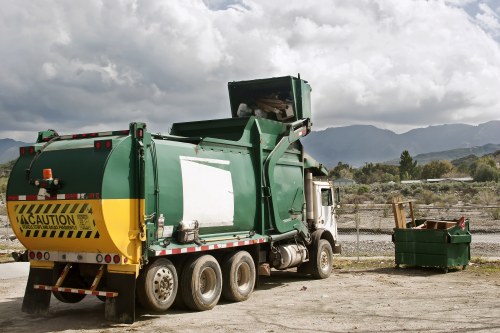 Vehicle safety is also included in the policy. Vehicles used for waste removal are maintained, loaded safely and secured to prevent shifting during transit. Drivers follow safe routes and load limits to avoid roadside hazards. Waste is segregated and labelled to ensure compliant disposal and recycling, reducing environmental risk as well as occupational hazards. Documentation accompanies waste consignments where required.
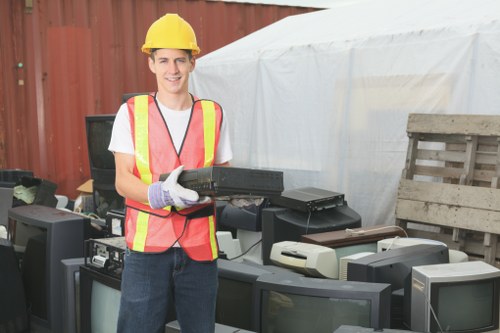 Particular attention is given to handling hazardous items commonly encountered during house clearances: batteries, solvents, asbestos-containing materials (suspected), sharps and medical waste. Such items are isolated and handled only by trained personnel or specialists. The policy prohibits informal disposal of hazardous materials and mandates reporting and specialist disposal for regulated waste streams. This ensures the rubbish collection service area operates within safe and sustainable practices.
Incident reporting and investigation procedures are straightforward: all incidents, injuries and dangerous occurrences must be reported immediately, recorded and investigated. Investigations focus on root causes and corrective actions. Where necessary, risk assessments are updated and staff briefed. The aim is to learn from events and reduce future harm across the clearance services.
Hygiene and welfare provisions are described in the policy: hand-washing facilities, waste containment, and arrangements for breaks and rest to prevent fatigue. Mental health is also recognised; workers are supported through reasonable adjustments and access to welfare resources. Stress and fatigue are hazards that affect attention to safety and must be managed proactively.
The policy is regularly reviewed to reflect changes in legislation, industry practice and service demands across the broader rubbish company service area. Audits, inspections and performance metrics are used to monitor compliance. Where non-conformities are found, corrective action plans are implemented and tracked to completion. Management commitment and workforce engagement are essential to sustain improvement.
Enforcement and consequences for non-compliance are clear: persistent unsafe behaviour is managed through formal performance processes. Positive behaviours are recognised to encourage a safety culture. The policy underlines that safety is everyone's responsibility and that safe rubbish removal service delivery protects people and reputations alike.
In summary, this Health and Safety policy provides a practical framework for delivering safe house clearance and rubbish collection across our service area. It balances operational efficiency with robust risk management, ensuring that clearance services are conducted safely, responsibly and sustainably.
Reviewed and maintained by senior management, the policy is a living document designed to evolve with operational needs and legal requirements.
